A new website is a big step for any small business. Many owners in Austin know they need a modern site, but they don’t know how long the process takes or what happens at each stage.
Some expect a website in a week. Others wait months because the project keeps changing. The truth sits somewhere in the middle.
This guide explains the real timeline behind Austin web design services, what each phase includes, and how you can avoid delays. If you plan things well, your project moves faster and costs less.
Let’s walk through the process step by step.
Why Timeline Planning Matters
A website is not just a design. It includes planning, content, structure, testing, and launch preparation.
When businesses skip planning, problems appear later:
• Pages get rebuilt
• Content changes repeatedly
• Features are added late
• Launch dates keep moving
Good Austin web design projects start with clarity. When goals are clear, everything moves smoothly.
Most small business websites take 4 to 10 weeks, depending on complexity and client response time.
Phase 1 Discovery and Planning 1–2 Weeks
This stage decides the direction of the whole project.
Your web team usually asks:
• What services do you offer?
• Who are your customers?
• What action should visitors take?
• Do you need bookings, payments, or forms?
• Who are your competitors?
Some business owners rush this stage. That’s a mistake. Poor planning creates redesign work later.
During discovery, your provider also reviews competitor sites and decides what structure fits your business best.
Typical outputs of this stage:
• Website structure or sitemap
• Required features list
• Branding review
• Target audience clarification
Once approved, design work begins.
Phase 2 Content Collection and Preparation 1–3 Weeks
Here is where many projects slow down.
Designers cannot build pages without content. Yet many owners delay sending:
• Service descriptions
• Company information
• Team details
• Photos
• Testimonials
If content isn’t ready, designers must wait or use placeholders, which causes revisions later.
A smart move is preparing content early. If writing feels difficult, many Austin web design services include copywriting help.
Content usually includes:
• Homepage messaging
• Service pages
• About page
• Contact details
• FAQs
• Call-to-action messages
Businesses that prepare content early often cut project time by two weeks or more.
Phase 3 Website Design 1–2 Weeks
Now designers build the visual layout.
This phase focuses on:
• Homepage design
• Layout structure
• Color usage
• Font choices
• Mobile responsiveness
• User experience flow
You normally review mockups before full development starts.
Common mistake: requesting many design directions at once.
Pick a direction, refine it, and move forward. Too many changes delay progress.
A good Austin web design partner shows designs on both desktop and mobile views so you understand how users will experience the site.
Once design is approved, development begins.
Phase 4 Development and Page Building 2–4 Weeks
This is where the site becomes real.
Developers build pages, add features, and connect tools. Tasks often include:
• Page creation
• Mobile optimization
• Contact forms
• Booking tools
• E-commerce setup if needed
• Speed optimization
• Security configuration
Business owners sometimes ask for new features here. But adding ideas mid-development pushes timelines back.
Stick to the original plan when possible.
Reliable Austin web design services also ensure the site works smoothly across browsers and devices.
Phase 5 Content Upload and SEO Setup 1–2 Weeks
After pages are built, content gets added and optimized.
This includes:
• Text formatting
• Image placement
• Page titles and descriptions
• URL structure
• Basic SEO settings
• Internal linking
This stage matters because search engines use this information to understand your site.
Your web provider may also prepare:
• Google Analytics setup
• Search Console integration
• Sitemap submission
Good preparation here helps future search rankings.
Phase 6 Testing and Revisions 1 Week
Before launch, everything must be checked.
Testing usually includes:
• Mobile responsiveness check
• Page speed testing
• Form submission testing
• Broken link checks
• Button and navigation testing
You review the site and request final edits.
But here’s an important point: revisions should fix issues, not redesign pages again. Endless changes delay launch.
Keep feedback focused and practical.
Phase 7 Website Launch and Post-Launch Support
Once approved, your website goes live.
Launch steps include:
• Domain connection
• Hosting setup
• Final backups
• Security checks
After launch, teams usually monitor the site to catch small issues.
Good providers offer post-launch support to fix bugs or help with updates.
And remember: launch is the start, not the end.
Websites need updates, content growth, and SEO improvements over time.
What Can Delay a Website Project
Many delays don’t come from designers. They come from unclear direction or slow approvals.
Common delay causes include:
Late content delivery
Frequent design changes
Adding features mid-project
Slow feedback response
Missing business information
If you want your project finished on time, stay involved and respond quickly.
How Austin Small Businesses Can Speed Up the Process
Want your website live faster? Do these things early:
Prepare content in advance
Collect business images and branding assets
List required features before starting
Respond quickly to approvals
Avoid adding features mid-build
Businesses that prepare properly often launch websites weeks sooner.
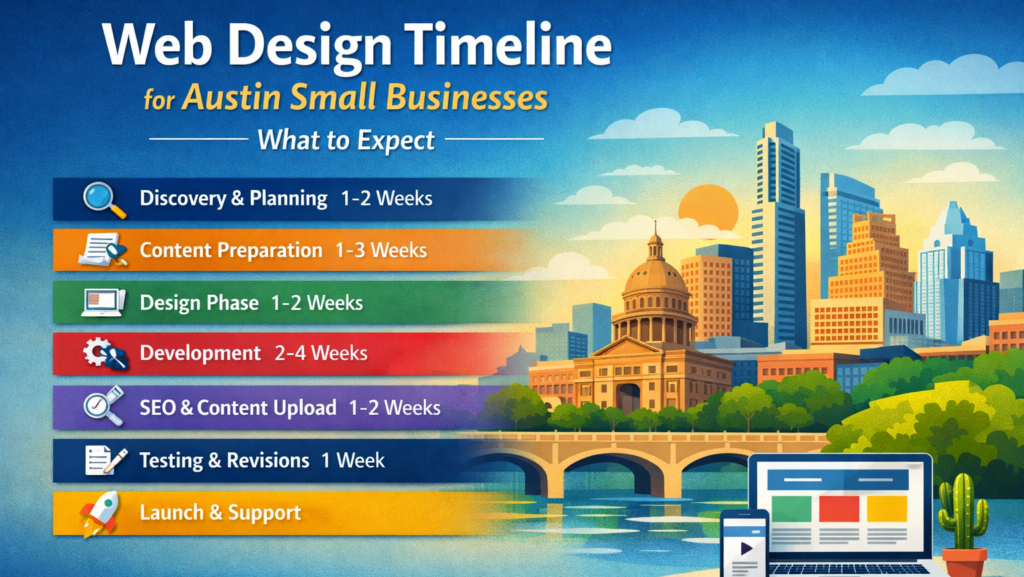
Realistic Timeline Summary
For most small businesses using Austin web design services, the timeline looks like this:
Planning and discovery: 1–2 weeks
Content preparation: 1–3 weeks
Design stage: 1–2 weeks
Development stage: 2–4 weeks
SEO and content upload: 1–2 weeks
Testing and launch: 1 week
Total average: 4 to 10 weeks
Simple sites move faster. Complex sites need more time.
When a Faster Website Is Possible
Sometimes businesses need a website quickly.
A basic site can be launched in 2–3 weeks if:
Content is ready
Design decisions are quick
Features are simple
Client feedback is fast
But rushing complex projects usually leads to problems later.
What Happens After Launch
A website doesn’t stay finished forever.
After launch, focus shifts to:
• SEO improvements
• Content updates
• Conversion optimization
• Speed improvements
• Security updates
Your site should grow with your business.
Final Thoughts for Austin Business Owners
Many owners think building a website is just design work. But planning, content, and decision speed matter just as much.
If you work closely with your provider, your project runs smoothly.
Good Austin web design projects follow a clear process, avoid unnecessary changes, and keep communication simple.
And here’s the honest part: if you delay content or keep changing direction, no timeline will save the project. Preparation makes the biggest difference.
Know your goals. Stay involved. Approve quickly. And your website will launch faster than you expect.